
Losing a tooth is one thing. Deciding how to replace it is another. With three main options available, dental implants, dentures, and bridges, patients often feel overwhelmed trying to figure out which one is right for their situation. Each option has genuine strengths. Each also has real limitations. The best choice depends on your oral health, your lifestyle, and your long-term goals.
At Trafalgar Village Dental in Oakville, Dr. Nitin Kapoor helps patients work through this decision every day. Here’s an honest, side-by-side look at all three options so you can walk into that conversation already informed.
The Core Problem with Tooth Loss
Before comparing options, it helps to understand what tooth loss actually does. When a tooth goes missing, the jawbone beneath it loses the stimulation it needs to stay dense and healthy. Without that stimulation, the bone begins to resorb, shrinking in both height and width over time. This affects neighbouring teeth, changes your bite, and eventually alters the shape of your face.
Any tooth replacement option worth considering should address both the visible gap and the underlying bone health concern. How well each option handles that second part is one of the clearest ways to compare them.
Dental Implants: The Standard for Long-Term Results
Dental implants replace the entire tooth structure, root and crown. A titanium post surgically placed into the jawbone acts as an artificial root. Once the post integrates with the surrounding bone through a process called osseointegration, a custom crown attaches on top. The result looks, feels, and functions like a natural tooth.
What dental implants do well:
Dental implants are the only tooth replacement option that actively preserves jawbone. The titanium post transmits chewing forces into the bone, signalling it to maintain its density. This prevents the gradual bone loss and facial changes that missing teeth cause over time.
Dental implants also deliver the closest thing to natural bite force. You can eat whatever you like without restrictions. There are no adhesives, no removal routines, and no adjustments required as your jaw changes shape, because the bone around a well-maintained implant doesn’t change shape the way it does under dentures.
With proper care, the implant post itself can last a lifetime. The crown may need replacement after 15 to 25 years depending on wear, but the foundation beneath it stays solid.
Where dental implants require consideration:
Dental implants involve a surgical procedure and a healing period of several months before the final crown is placed. Patients need sufficient bone density to support the implant post. Those with significant bone loss may require a bone graft before placement. The upfront investment is higher than dentures or bridges, though the long-term cost picture often favours implants when ongoing maintenance and replacement costs are factored in.
Dentures: Accessible but Limited
Dentures are removable prosthetics that replace a full arch or multiple missing teeth. They sit on the gum surface and rely on suction, adhesive, or implant attachments to stay in place. Dentures have been a standard tooth replacement solution for decades and remain a practical option for many patients.
What dentures do well:
Dentures restore basic appearance and function without surgical intervention. They work for patients who have lost most or all of their teeth and are not candidates for implants due to health or bone density concerns. Conventional dentures are also generally more affordable upfront than dental implants or implant-supported alternatives.
Where dentures fall short:
Traditional dentures don’t address bone loss at all. Because they rest on the gum surface rather than integrating with the jaw, they provide no stimulation to the underlying bone. Bone resorption continues beneath the denture, which is why dentures require periodic relining and replacement as the jaw changes shape over time.
Slipping, clicking, and discomfort during eating and speaking are common complaints among denture wearers. Many patients find themselves limiting their diet and avoiding certain social situations as a result. Denture adhesives help but don’t fully resolve the stability problem.
Implant-supported dentures, which snap onto two to four implants per arch, significantly improve stability and help slow bone loss. They represent a middle ground between conventional dentures and a fully fixed implant restoration.
Bridges: Effective but at a Cost to Neighbouring Teeth
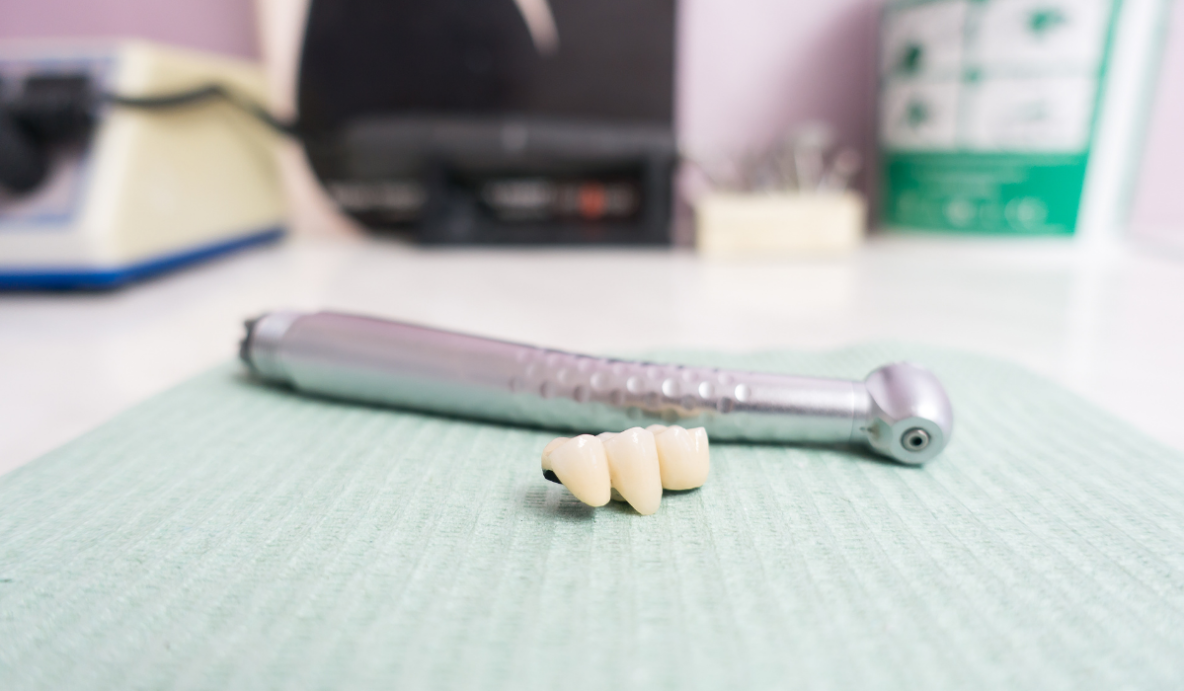
A dental bridge spans a gap by anchoring a prosthetic tooth (or teeth) to the natural teeth on either side of the space. Those neighbouring teeth, called abutment teeth, must be filed down and crowned to support the bridge structure.
What bridges do well:
Bridges restore appearance and chewing function without surgery. Treatment is completed in a relatively short timeframe compared to dental implants, typically two to three appointments. Bridges are a reliable option for patients who aren’t implant candidates and who have healthy neighbouring teeth to serve as anchors.
Where bridges fall short:
The most significant drawback of a bridge is what it requires from adjacent healthy teeth. Filing down two sound teeth to support a bridge permanently alters their structure and places them under added stress for the life of the restoration. If those abutment teeth develop problems later, the entire bridge is affected.
Like dentures, bridges also don’t address bone loss beneath the gap. The bone in the area of the missing tooth continues to resorb over time because no root replacement stimulates it. Bridges typically last 10 to 15 years before requiring replacement, and each replacement cycle involves the same abutment teeth, increasing cumulative risk to those teeth over time.
Comparing All Three Side by Side
Bone preservation: Dental implants actively preserve bone. Implant-supported dentures slow bone loss. Conventional dentures and bridges don’t address it.
Stability and function: Dental implants deliver near-natural bite force and complete stability. Bridges are stable but rely on neighbouring teeth. Conventional dentures are the least stable option.
Impact on neighbouring teeth: Dental implants stand completely independently. Bridges require permanent alteration of adjacent teeth. Dentures don’t affect neighbouring teeth directly.
Longevity: Dental implant posts can last a lifetime. Bridges typically last 10 to 15 years. Dentures require relining and eventual replacement as the jaw changes.
Surgical requirement: Dental implants require surgery and a healing period. Bridges and dentures do not.
Upfront cost: Dental implants carry the highest upfront cost. Bridges sit in the middle. Conventional dentures are generally the most affordable initially.
So Which Option Wins?
For most patients with sufficient bone density and good overall health, dental implants offer the strongest long-term outcome across every meaningful category. They preserve bone, restore full function, protect neighbouring teeth, and last the longest with the least ongoing maintenance.
That said, every patient’s situation is different. Bridges remain an excellent option for patients who aren’t surgical candidates or who need faster treatment timelines. Conventional and implant-supported dentures serve patients with more extensive tooth loss or specific health considerations that make implants less appropriate.
The right answer starts with a thorough assessment. Dr. Nitin Kapoor and the team at Trafalgar Village Dental take the time to review your full oral health picture before making any recommendation. The goal is always the option that serves you best, not the most expensive one on the menu.
Book Your Consultation in Oakville
If you’re weighing tooth replacement options and want a clear, honest conversation about what makes sense for your situation, Trafalgar Village Dental welcomes same-day and next-day appointments with 24-hour emergency care available when needed.
Call (905) 339-0404 to book your consultation. The clinic is located at 117 Cross Avenue, Oakville, ON L6J 2W7, conveniently near the Oakville GO Transit station. Care is available in English, Hindi, Punjabi, Urdu, Spanish, Russian, and Croatian.
The best tooth replacement option is the one that fits your health, your life, and your long-term goals. Trafalgar Village Dental is ready to help you find it.